
How Design and Industry Turn Ideas Into Real Products

Last Updated: November 15, 2026
Quick Summary
Design and industry are two halves of the same job: design decides what a product should be, while industry decides how it can actually be made. At 2B Studio, we treat that intersection as the whole point of product development, not a handoff between departments, so ideas become market-ready products.
Industrial design shapes form, function, and user experience so a product can be manufactured at scale.
The industrial design process runs through research, concept development, refinement, prototyping, and production support.
Design for manufacturing reviews a design against production constraints before tooling, when fixes are cheapest.
Pick two or three measurable outcomes before a project starts and track them at each phase gate.
Choose a partner who shows how manufacturability gets reviewed and prototypes early, not just a portfolio.
Ready to turn your concept into a product?
2B Studio pairs industrial design with manufacturability to move your idea toward production.
Table of Contents
Where Design and Industry Meet in Product Development
Design and industry are two halves of the same job: one decides what a product should be, the other decides how it can actually be made. At 2B Studio, we treat that intersection as the whole point of product development, not a handoff between departments. Get it right and ideas become market-ready products.
The gap is real. A 2021 review of Industry 4.0 case studies by researchers HN Ngoc and colleagues examined how human-centered design gets applied in production settings, and the recurring theme was coordination between design decisions and manufacturing realities (human-centered design in Industry 4.0 case study review(https://pmc.ncbi.nlm.nih.gov/articles/PMC8195456/)).
Below, we break down what each discipline owns, how the process runs phase by phase, and how to pick a partner who understands both sides.

Industrial Design vs Product Design: What the Titles Actually Mean
Industrial design is the discipline of shaping a physical product's form, function, and user experience so it can be manufactured at scale. Product design is a broader term that often covers the same work, plus digital interfaces and service layers.
In practice, the titles overlap heavily. A product designer at a hardware company usually does industrial design work. If you want the full definition, our guide on what industrial design is covers the discipline end to end.
Where Industrial Design and Mechanical Engineering Split
Industrial design answers "what should this feel like to use?" Mechanical engineering answers "will it survive the drop test and fit the housing?" The design engineer sits between them, translating intent into geometry that machines can cut, mold, and assemble.
Neither side wins. A beautiful shell that can't be molded is a sculpture. A rugged enclosure nobody wants to hold is a box.
The Industrial Design Process, Phase by Phase
The industrial design process moves through five phases: research, concept development, refinement, prototyping, and production support. Each phase narrows options and raises technical feasibility. What most guides leave out is how those phases connect across the full product lifecycle, from first research question to post-launch improvement, and how you measure whether each phase actually worked. That lifecycle view is where design and industry stop being a handoff and start being one system.
Research and user needs. Define who uses the product, where, and under what constraints. Outputs: a requirements brief, use-case scenarios, and a list of regulatory or standards constraints the product must satisfy. Measure it by how many open questions the brief closes before sketching begins.
Concept development. Sketch and model multiple directions before committing. Outputs: several distinct concepts, rough cost and process assumptions for each, and a shortlist with reasons documented. Measure it by whether the shortlist survives a first manufacturability screen.
Design refinement. Resolve ergonomics, materials, and mechanical interfaces. Outputs: CAD geometry, material selections, tolerance stack-ups, and a draft bill of materials. Measure it by how many issues a design for manufacturing review surfaces at this stage versus later.
Prototyping and iteration. Build physical models, test them, and revise. Outputs: functional prototypes, usability findings, and a revision log. Measure it by the number of design changes per iteration and whether each change traces back to a test result.
Production support. Finalize drawings and work with manufacturing on tooling. Outputs: production-ready drawings, inspection criteria, and supplier handoff documents. Measure it by first-article inspection results and time from tooling release to saleable units.
Where the Lifecycle View Changes the Work
A phase-by-phase list treats production as the finish line. In practice, the lifecycle continues past launch: field failures, warranty returns, and user feedback feed back into the next revision. Teams that plan for this build serviceability and repairability into the design from phase three, not as an afterthought. A common pattern is to reserve a revision cycle in the development plan so post-launch findings have somewhere to go instead of triggering an emergency redesign.
Measuring Design Outcomes, Not Just Deliverables
Design value is often treated as purely aesthetic. It isn't. You can assess it against concrete outcomes: usability (task success and error rates from testing), manufacturability (yield and first-pass inspection rates), cost (part count and assembly time), quality (defect and return rates), adoption (how the product performs in its market), and time to market (calendar time from concept approval to first saleable unit).
Design for Manufacturing: Catching Problems Before Tooling
Design for manufacturing, or DFM, is the practice of reviewing a design against the constraints of its production method before anyone cuts steel. It is the cheapest stage to fix problems and the most expensive one to skip.
Watch out: teams that approve tooling before a DFM review often discover draft angles or wall thicknesses that force a full redesign, and tooling costs are rarely recoverable. Our design for manufacturing how-to guide walks through the review step by step.
If you want to talk through your project, contact 2B Studio.
The process runs through five phases, each with its own outputs and a way to measure whether it worked.
Phase | Outputs | How to measure it |
Research and user needs | Requirements brief, use-case scenarios, regulatory constraints | How many open questions the brief closes |
Concept development | Several distinct concepts, rough cost and process assumptions, shortlist | Whether the shortlist survives a manufacturability screen |
Design refinement | CAD geometry, material selections, tolerance stack-ups, draft bill of materials | Issues surfaced at a design for manufacturing review |
Prototyping and iteration | Functional prototypes, usability findings, revision log | Design changes per iteration traced to test results |
Production support | Production-ready drawings, inspection criteria, supplier handoff documents | First-article inspection results and time to saleable units |
Product Usability Testing and the User Needs Behind It
Product usability testing is the structured observation of real users attempting real tasks with a prototype. It replaces assumptions about user experience with evidence.
Testing doesn't need a lab. The FDA's guidance on human factors and usability engineering for medical devices shows how seriously regulated industries treat this step (FDA human factors and usability engineering guidance(https://www.fda.gov/regulatory-information/search-fda-guidance-documents/applying-human-factors-and-usability-engineering-medical-devices)). For a deeper method, read how to run user research for product design.
Industrial Design Examples That Show the Discipline at Work
Good industrial design examples share one trait: form and function reinforce each other. The useful question is not what a product looks like but which design decision drove which production or performance outcome.
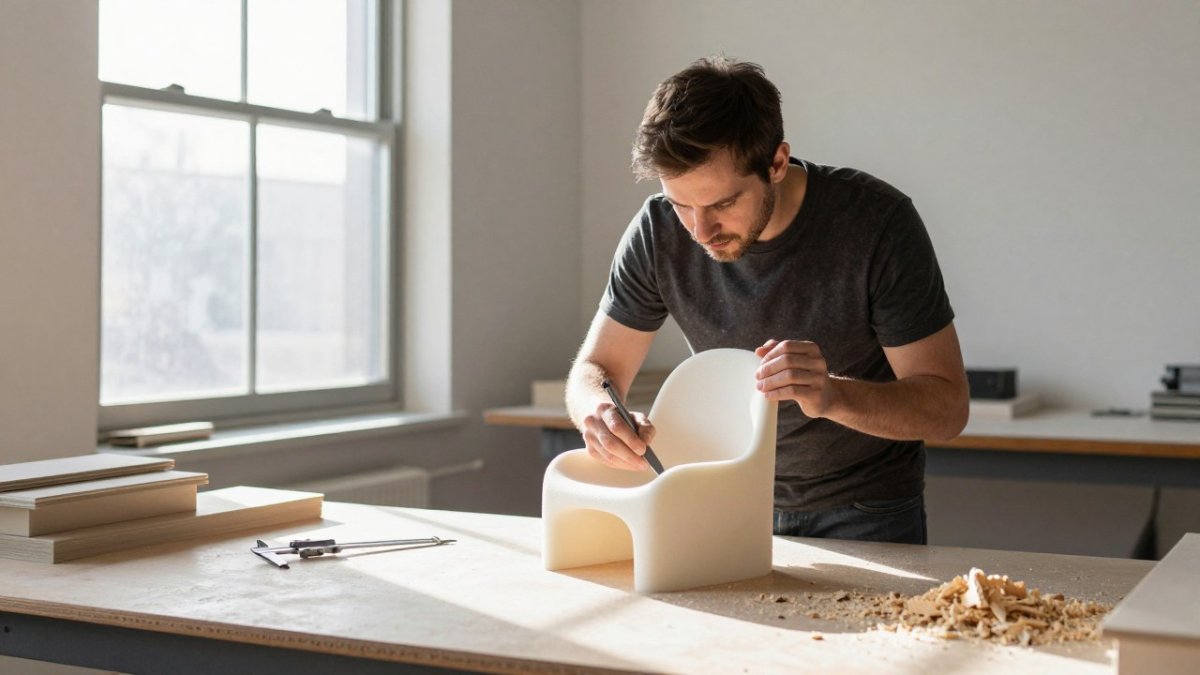
Take a tub armchair.
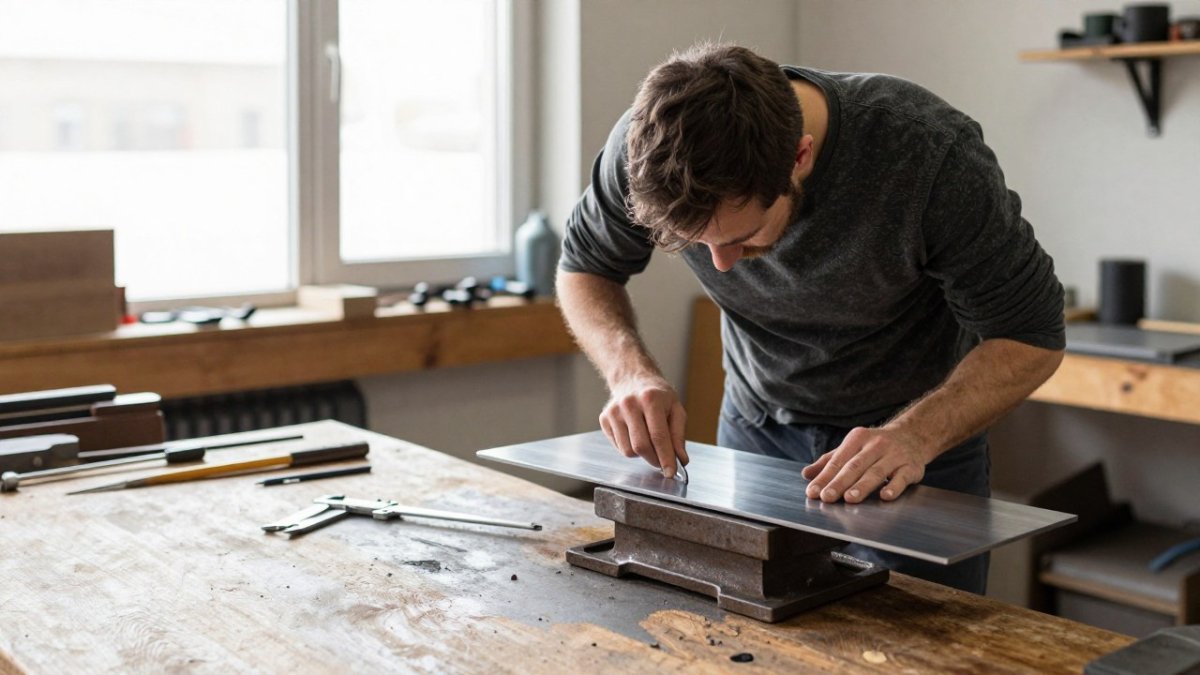
Take a wall-mounted organizer with cutout hooks. Solving storage with a single stamped or molded panel reduces parts count, eliminates fasteners, and simplifies assembly. The design choice is a production choice, and the production choice is a cost and quality choice.
How Constraints Differ by Sector
The same principle plays out differently depending on what you are building, and the constraints are where the real design work lives:
Medical devices. Usability engineering and human factors documentation are part of the regulatory path, not an optional test. Design decisions must be traceable to risk analysis, and the FDA's guidance on human factors and usability engineering for medical devices shows how formally this is treated (FDA human factors and usability engineering guidance(https://www.fda.gov/regulatory-information/search-fda-guidance-documents/applying-human-factors-and-usability-engineering-medical-devices)). Cleanability, material compatibility, and sterilization methods constrain form early.
Consumer products. Cost, shelf presence, and packaging drive decisions. Part count and assembly time matter as much as appearance, because retail margins are thin and returns are expensive.
Industrial equipment. Serviceability, durability, and safety guarding dominate. A design that is hard to maintain in the field costs the owner every time it goes down, so access panels and replaceable modules are design requirements, not conveniences.
Tools Change; the Principle Doesn't
The tools in the workflow, CAD, simulation, rapid prototyping, digital manufacturing, keep changing, but the test stays the same: every decision should serve the user and the production line at once. When a design decision can't be explained in terms of both, it usually isn't finished.
If you want your own product examined through that lens, decision by decision, constraint by constraint, contact 2B Studio to talk through your project.
Common Misconceptions About Design and Industry Standards
The biggest misconception is that design and industry are sequential: design first, then hand it to manufacturing. In reality they run in parallel, and the handoff model is where cost overruns originate.
Three more myths worth retiring:
"Standards kill creativity." Standards define the boundaries; good design works inside them.
"Prototyping is the expensive part." Late changes are. Prototypes are cheap insurance.
"One expert can cover both." Cross-functional collaboration beats a generalist every time on complex products.
How to Choose a Design Partner for Physical Product Development
Choose a partner who can show you how manufacturability gets reviewed, who prototypes early, and who documents decisions in a way your suppliers can use. Ask for the process, not the portfolio.
Questions to ask when evaluating a partner:
Do they review designs against production methods before tooling?
Can they prototype in-house or through vetted suppliers?
Do they document decisions for R&D and supplier handoff?
How do they handle scope changes?
Do they understand your local supply chain and contract manufacturers?
Our article on how to choose an industrial design firm expands each point into questions you can ask directly. If you want to see how design and manufacturability sit under one roof, look at design + manufacturability.
The real challenge isn't finding someone who can sketch.
Frequently Asked Questions
What is the difference between industrial design and product design?
The terms overlap heavily. Industrial design traditionally centers on physical form, ergonomics, materials, and how a product is manufactured at scale. Product design is broader and can include digital interfaces, packaging, and service touchpoints alongside the physical object. In practice, many studios use both titles for the same work. What matters when you hire is the specific scope: does the team handle concept development, CAD, prototyping, and design for manufacturing, or only the early visual work? Ask that question directly before signing anything.
How does the industrial design process reduce manufacturing problems?
The industrial design process moves through research, concept development, CAD, prototyping, and design for manufacturing review before tooling is cut. Each phase is a chance to catch issues while changes are still cheap. A wall thickness that will warp, a draft angle that will not release from a mold, or a snap fit that will crack are all far less expensive to fix on a prototype than on a production tool. Studios that build manufacturability checks into every phase, rather than bolting them on at the end, avoid the redesign cycles that blow up timelines.
Why does product usability testing matter before production?
Product usability testing puts a working prototype in front of real users and records where they hesitate, misread controls, or use the product differently than intended. Findings at this stage are still inexpensive to act on. Once tooling exists, a change to a button layout or grip geometry can mean reworking a mold. Testing also surfaces user needs the team assumed rather than observed. Even a small round of five to eight participants can expose patterns that reshape the design before commitments are made.
How do I choose a design partner for a physical product?
Look for evidence the team understands manufacturing, not just aesthetics. Ask to see how they document design for manufacturing decisions, how they handle scope changes mid-project, and whether they work with contract manufacturers directly. For regulated products, ask how they structure documentation, which matters if you plan to claim R&D tax credits. A partner who answers these questions with specifics, rather than reassurances, is the one worth hiring.
Comments