
5 Benefits of Industrial Design for Startups

Table of Contents
What Is Industrial Design and Why Startups Need It
Benefit 1: Lower Manufacturing Costs Through Design Decisions
Benefit 2: Faster Time to Market With a Structured Product Development Process for Startups
Benefit 3: Industrial Design Prototyping Reduces Risk Before You Commit to Tooling
Benefit 4: Better User Experience That Earns Repeat Customers
Benefit 5: A Clear Competitive Edge, Backed by Industrial Design Examples
Conclusion: Turn Your Concept Into a Market-Ready Product
Frequently Asked Questions
Last Updated: October 21, 2026
What Is Industrial Design and Why Startups Need It
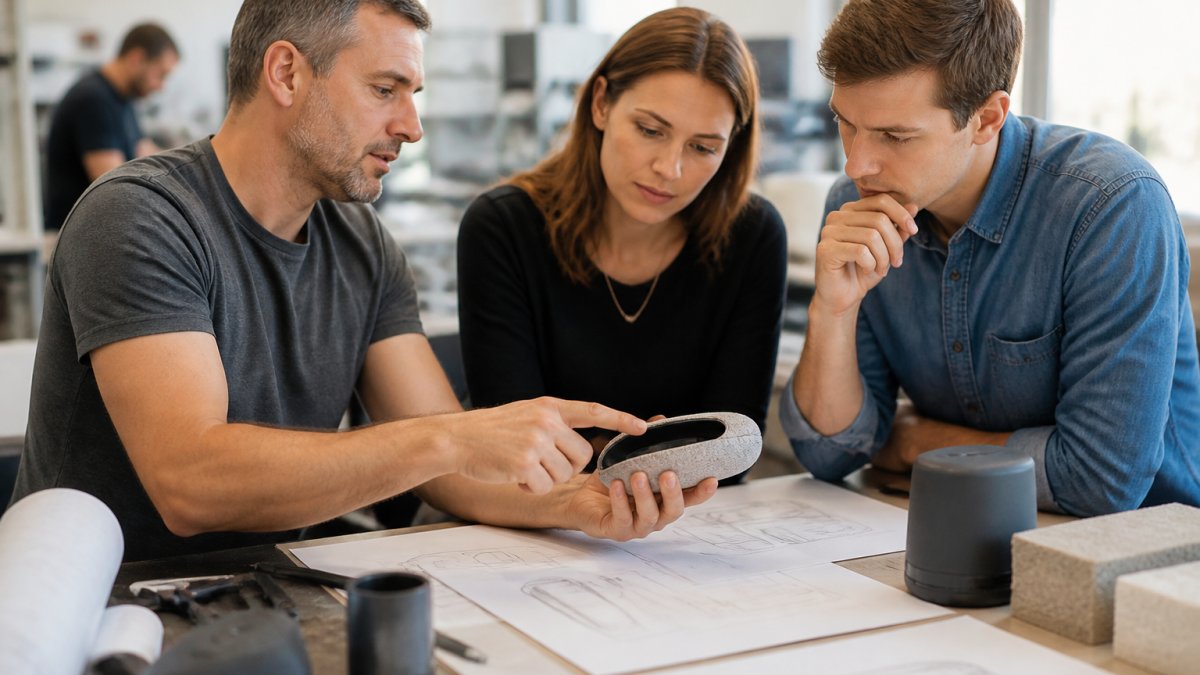
Industrial design is the discipline of shaping a physical product's form, function, and manufacturability so it can be produced at a viable cost and sold to a real market. At 2B Studio, we practice industrial design as design-driven product development: we balance manufacturing requirements, user experience, and marketplace demands to deliver versatile design solutions that resonate with your audience. We transform your concepts into market-ready products through creative design partnerships.
For a founder moving from a working idea to a sellable product, the 5 benefits of industrial design for startups come down to cost, speed, risk, user experience, and differentiation. Below, we walk through each one with the decisions that actually drive it.
The order matters. Cost and speed compound first, and the rest follow.
Benefit 1: Lower Manufacturing Costs Through Design Decisions
Most of a product's unit cost is locked in before anyone requests a quote. Wall thickness, part count, material choice, draft angles, and fastener strategy all get decided during design, and each one moves the per-unit price. A design that ignores those details is expensive to mold, assemble, and ship no matter how good it looks.
The practical move is to treat cost as a design input. We review part count and assembly steps early, consolidate components where it makes sense, and pick processes that match the startup's expected volume rather than the volume a founder hopes for later.
Watch Out The most expensive mistake we see is designing for a process the startup cannot afford yet. A shape that needs complex tooling will price you out of your first production run, and redesigning after tooling exists costs far more than changing the CAD file.
Benefit 2: Faster Time to Market With a Structured Product Development Process for Startups
Speed comes from sequence, not hustle. A structured product development process for startups moves through concept, feasibility, design refinement, prototyping, and production readiness in defined stages, with a decision and a deliverable at each gate. That structure is what stops a project from looping back to "let's rethink the housing" three months in.
The time savings show up in the handoffs. When the design file is built for manufacturing from the start, the contract manufacturer spends less time asking questions and more time quoting and building.
Phase | Focus | What You Walk Away With |
Concept | Problem definition, user needs, rough form | Direction and constraints |
Feasibility | Materials, processes, cost drivers | A buildable approach |
Design refinement | CAD, detailing, DFM review | Production-intent files |
Prototyping | Physical validation | Tested, adjusted design |
Production readiness | Supplier handoff, documentation | A manufacturable product |
Benefit 3: Industrial Design Prototyping Reduces Risk Before You Commit to Tooling
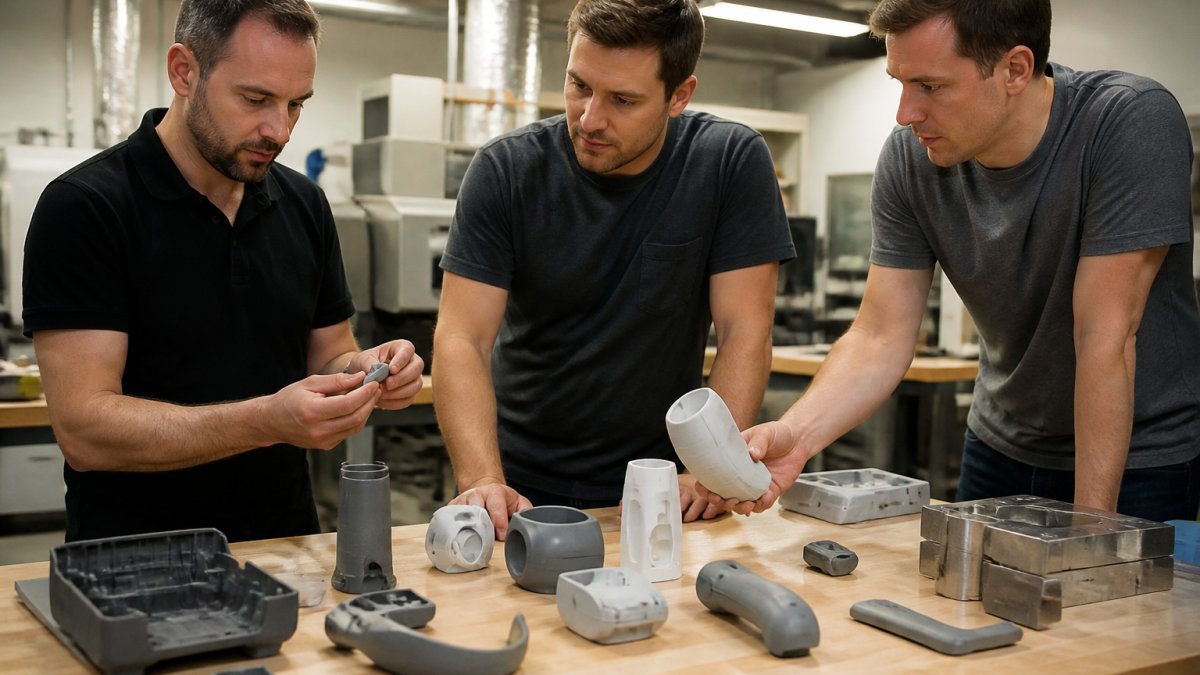
Tooling is the point of no return. Once molds and fixtures are cut, changes get expensive fast, so the goal of industrial design prototyping is to spend a little to learn a lot while the design is still soft. Physical prototypes expose problems that screens hide: how a grip actually feels, whether a seam catches, whether the assembly goes together in the right order.

We treat each prototype as a question. An early model answers "does the form work in hand," a later one answers "does this snap fit survive repeated use," and the last one confirms the design is ready for a tooling quote. That progression is cheaper than discovering the same answers in production.
Pro Tip Build prototypes at the same scale and material family as the final part whenever possible. A model in the wrong material can pass a test that the real product fails, which is worse than no test at all.
Benefit 4: Better User Experience That Earns Repeat Customers
A product that is easy to hold, easy to understand, and pleasant to use gets recommended. User experience in physical products is not decoration; it is the sum of ergonomics, intuitive controls, clear labeling, and how the product feels the hundredth time someone picks it up.
Startups feel this more than established brands because they usually get one shot at a first impression. A confusing assembly or an awkward button teaches a customer to distrust the whole product, and that customer does not come back for version two. Designing for the user early, with real feedback on prototypes, is how you build a product people keep.
Benefit 5: A Clear Competitive Edge, Backed by Industrial Design Examples
Differentiation is a design outcome. Two products can solve the same problem and only one sells, because one looks and feels like it belongs in the customer's life. Industrial design examples that stand out usually share a trait: the form, the materials, and the user experience all point at the same idea instead of contradicting each other.
For a startup, that coherence is the edge. A considered product signals that the company understands its customer, which supports a higher price, better reviews, and shelf or listing appeal. We help founders find that single idea and carry it through every part of the product so the market reads it instantly.
Conclusion: Turn Your Concept Into a Market-Ready Product
The hard part is not having an idea; it is carrying that idea through cost decisions, prototype rounds, and manufacturing handoffs without losing what made it good. That is the work we do at 2B Studio, from design-driven product development through prototyping and production-ready files.
If you are ready to move from concept to a product you can actually build and sell, say hi. We will walk through your project, the constraints you are working with, and the fastest realistic path to a market-ready product.
Frequently Asked Questions
How can industrial design benefit a startup?
Industrial design helps startups lower manufacturing costs by resolving production constraints early, speed up time to market with a structured product development process, and reduce risk through prototyping before committing to tooling. It also improves user experience, which supports repeat purchases, and creates a visual and functional edge that helps a new product stand out on crowded shelves and marketplaces.
When should a startup hire an industrial designer?
Bring an industrial designer in as soon as you have a validated problem and a rough concept, before you spend on tooling or commit to a factory. Designers can help you evaluate feasibility, plan industrial design prototyping, and set a product development process that fits your budget. Waiting until the design is locked often means expensive rework later.
How does industrial design help make a product easier to manufacture?
Industrial designers balance manufacturing requirements with user experience from the start. They choose materials and processes that fit your volume, design parts for assembly, and account for tolerances and tooling constraints. This prevents designs that are impossible or too costly to produce, and it reduces change orders after you have committed to a supplier.
How can startups test a product concept before manufacturing?
Use industrial design prototyping to build physical models at increasing levels of fidelity. Early prototypes can be simple form studies to check ergonomics and appearance; later ones can use production-intent materials to test fit, function, and assembly. Testing prototypes with real users and contract manufacturers surfaces problems while changes are still inexpensive.
Say hi

Comments