
Human-Centered Design: A Complete Guide

Table of Contents
What Is Human-Centered Design?
Core Human-Centered Design Principles
Empathy and Understanding User Needs
Iterative Problem-Solving
Collaboration and Co-Design
The Human-Centered Design Process
Step 1: Research and User Interviews
Step 2: Define the Problem
Step 3: Ideation and Concept Development
Step 4: Prototyping and Testing
Step 5: Refinement and Implementation
Human-Centered Design Tools and Methods
User Journey Mapping
Personas and Stakeholder Analysis
Low-Fidelity Prototyping
Real-World Human-Centered Design Examples
Physical Product Design
Healthcare and Medical Devices
Accessibility and Inclusive Design
Measuring Success and Outcomes
Applying Human-Centered Design to Your Product
Frequently Asked Questions
Last Updated: October 19, 2026
What Is Human-Centered Design?
Human-centered design is a problem-solving approach that prioritizes understanding the people who will use a product, service, or system.
At 2B Studio, we apply human-centered design principles to every product we develop.
Human-centered design differs fundamentally from traditional product development. Conventional approaches often begin with technical specifications or market trends; human-centered design flips this, putting research and empathy first so design decisions flow from genuine user insights.
The process is iterative and collaborative. Teams cycle between research, problem definition, ideation, prototyping, and testing until the solution truly fits user needs, which is particularly valuable in industrial design and product development where manufacturing constraints and user experience must align.
Core Human-Centered Design Principles
Three foundational principles underpin effective human-centered design work: empathy and understanding user needs, iterative problem-solving, and collaboration with stakeholders and end users.
Empathy and Understanding User Needs
Empathy in human-centered design means moving beyond surface-level assumptions about what users want. It requires direct engagement with real people in their actual environments, observing how they interact with existing products and identifying friction points.
Understanding user needs goes deeper than collecting feature requests. Users often cannot articulate what they truly need because they work within the constraints of existing solutions.
Qualitative research methods, particularly user interviews and contextual observation, reveal the reasoning behind user behavior.
Iterative Problem-Solving
Iterative problem-solving acknowledges that no team gets the solution right on the first attempt. The human-centered design process builds in multiple cycles of prototyping, testing, and refinement, each generating feedback that informs the next iteration.
This approach reduces risk significantly. Rather than investing months in a fully engineered product only to discover it misses the mark, teams build rough prototypes early, test them with users, and adjust direction based on real feedback.
Iteration also surfaces manufacturing constraints early. A prototype reveals whether an elegant design concept can actually be manufactured at reasonable cost and quality.
Collaboration and Co-Design
Collaboration means involving multiple perspectives throughout the design process. Engineers, designers, manufacturers, and most importantly, actual users all contribute insights that shape the final product.
Co-design takes this further by actively involving users in the design process itself.
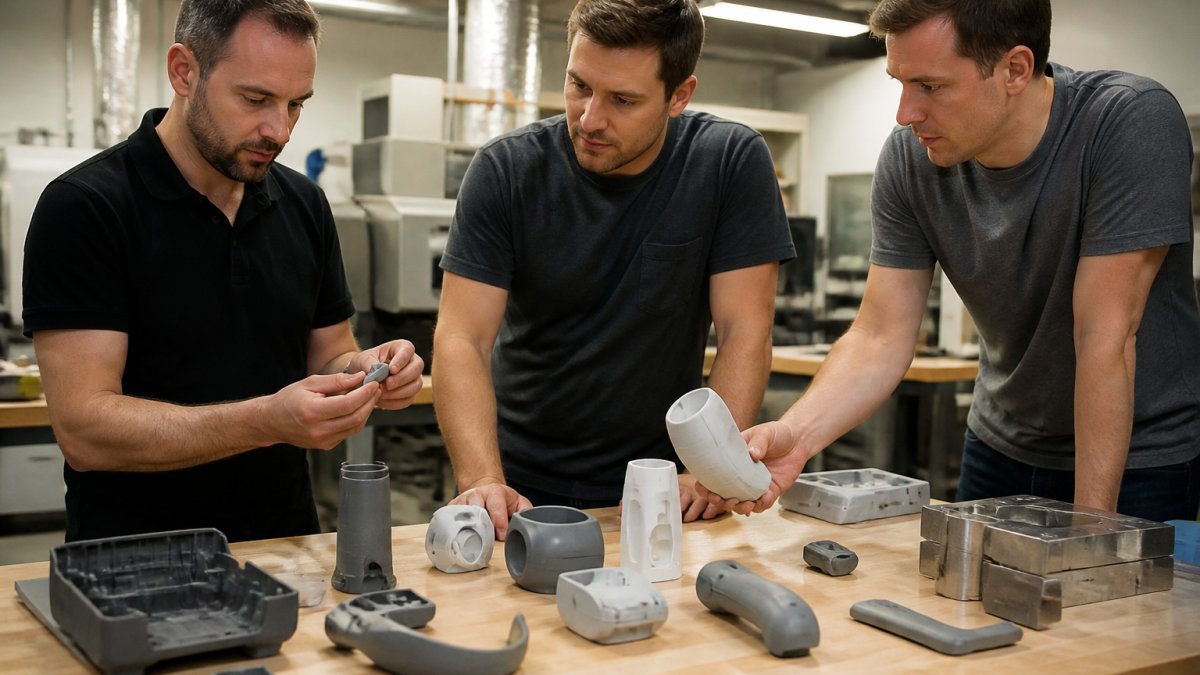
Cross-functional teams also prevent siloed thinking. When a designer, engineer, and manufacturing specialist work together from the start, conflicts between aesthetics, functionality, and manufacturability get resolved early through dialogue rather than discovered late through change orders.
The Human-Centered Design Process
The human-centered design process typically follows five core phases: research and user interviews, problem definition, ideation and concept development, prototyping and testing, and refinement and implementation. These phases are not strictly linear, teams often cycle back to earlier stages as new insights emerge.

Step 1: Research and User Interviews
Research establishes the factual foundation for all subsequent design decisions, answering fundamental questions: Who will use this product? What problems do they face? What contexts do they work in?
User interviews are the core research method in human-centered design.
Observation complements interviews. Watching users interact with existing products in their actual environment, whether that's a hospital, manufacturing floor, or home kitchen, reveals habits and workarounds that users themselves might not consciously recognize.
Step 2: Define the Problem
Problem definition translates research findings into a clear, actionable problem statement, preventing teams from elegantly solving the wrong problem.
A well-defined problem statement captures the core issue without prescribing a solution.
Problem definition also identifies constraints and stakeholders. Manufacturing feasibility, regulatory requirements, cost targets, and user expectations all shape viable solutions, and naming these constraints explicitly prevents teams from pursuing directions that look promising but cannot be implemented.
Step 3: Ideation and Concept Development
Ideation generates multiple potential solutions, prioritizing quantity and diversity over immediate refinement. Techniques like brainstorming, sketching, and scenario building help teams explore different directions without judgment.
Solution generation should remain open to unconventional approaches. The most innovative solutions often come from questioning assumptions that seemed fixed. Why must the product work this way? What if we inverted that constraint?
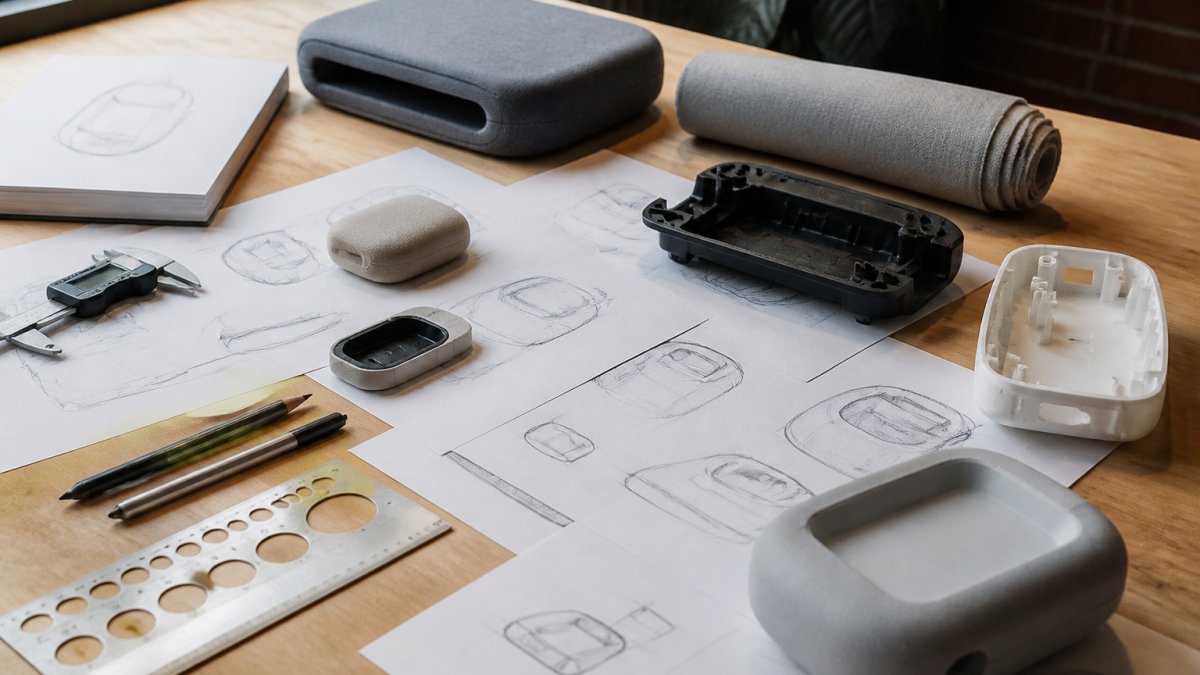
Concept development takes promising ideas and makes them concrete: rough sketches become detailed drawings, and vague concepts get written descriptions, so each can be meaningfully evaluated and compared.
Step 4: Prototyping and Testing
Prototyping translates concepts into physical or interactive forms that can be tested with users.
Testing with actual users reveals whether a design direction is working: does the prototype address the identified problem, introduce new ones, or confuse and frustrate users?
The testing phase is not about validating a predetermined solution. It is about learning. Teams should approach testing with genuine curiosity about whether their assumptions hold up. The most valuable feedback often contradicts initial expectations.
Step 5: Refinement and Implementation
Refinement incorporates testing feedback into improved versions of the design. This phase may involve multiple cycles of prototyping and testing as the design matures.
Implementation moves the refined design into production, requiring close collaboration between design and manufacturing teams to preserve design intent while meeting manufacturing requirements. Design for manufacturability (DFM) becomes critical; elegant designs that cannot be reliably manufactured at acceptable cost do not succeed in the market.
Human-Centered Design Tools and Methods
Several established tools help teams execute human-centered design effectively. These tools structure research, organize insights, and communicate findings to stakeholders.
UN Innovation Network
User Journey Mapping
User journey mapping visualizes how a user interacts with a product or service over time, documenting each step, the emotions experienced, the pain points encountered, and the opportunities for improvement.
Journey maps reveal where user experience breaks down. A customer might feel confident during the initial purchase but frustrated during setup, confused during operation, and unsupported during troubleshooting. Mapping this journey makes it clear that the design opportunity extends beyond the product itself to the entire experience ecosystem.
Personas and Stakeholder Analysis
Personas are detailed descriptions of representative user types. A well-constructed persona includes demographic information, goals, frustrations, and relevant behaviors. Personas help teams maintain focus on actual users rather than abstract "users" or the loudest stakeholder in the room.
Stakeholder analysis identifies everyone with an interest in the product's success or failure, including obvious stakeholders like end users and purchasers plus less obvious ones like maintenance technicians, regulatory bodies, or supply chain partners. Each group has different needs and priorities; mapping them helps teams identify conflicts and opportunities for solutions that serve multiple groups.
Low-Fidelity Prototyping
Low-fidelity prototypes are rough, quick representations of design concepts. They might be sketches, cardboard mockups, or simple 3D prints made from standard materials.
The value of low-fidelity prototypes lies in their speed and flexibility. Teams can build multiple versions in days rather than weeks, users can interact with physical forms rather than abstract drawings, and modifications are straightforward because the investment in any single prototype is minimal.
Low-fidelity prototypes are particularly useful for testing whether a design direction is fundamentally sound before investing in higher-fidelity development and tooling.
Real-World Human-Centered Design Examples
Physical Product Design
Physical product design benefits enormously from human-centered approaches. A manufacturer redesigning production equipment might discover through user interviews that operators spend significant time on maintenance tasks that better access design could eliminate. A furniture company might learn that existing chairs cause back pain not from cushioning but because armrest height forces an awkward posture. These insights, uncovered through direct user research, lead to designs that genuinely improve the user experience.
Healthcare and Medical Devices
Healthcare is a domain where human-centered design creates measurable impact. Medical device manufacturers who study how clinicians actually use devices often discover that intuitive operation matters more than additional features. A device requiring three steps to calibrate might fail in a busy operating room, while one requiring a single step might succeed. User research in actual clinical environments reveals these practical realities.
Patient-centered design in healthcare extends beyond devices to systems and workflows. Understanding how patients navigate appointment scheduling, medication management, or recovery protocols leads to designs that reduce errors and improve outcomes.
Accessibility and Inclusive Design
Accessibility and inclusive design ensure that products serve the broadest possible user population. Rather than treating accessibility as a compliance checkbox, human-centered design integrates accessibility from the beginning.
Inclusive design research deliberately includes participants with diverse abilities, backgrounds, and contexts. A product designed only with able-bodied users in mind will inevitably exclude people with disabilities.
Inclusive design also considers cultural context and language. A product that works perfectly in one market might fail in another if cultural assumptions are not examined. Human-centered design research in the target market reveals these contextual factors.
Measuring Success and Outcomes
Human-centered design success is ultimately measured by whether the product achieves its intended outcomes with users. This requires defining success metrics before design work begins and measuring outcomes after launch.
Meaningful metrics might include task success rates, time to completion, error rates, or user satisfaction.
These outcome measures differ from vanity metrics. A product might have high adoption without actually solving user problems effectively. Measuring whether users achieve their goals with the product reveals whether the design succeeded at its core purpose.
Applying Human-Centered Design to Your Product
Implementing human-centered design requires shifting from assumption-driven to research-driven development.
Build prototypes early and test them with users frequently. Treat early feedback as valuable guidance rather than criticism. Iterate based on what you learn.
The human-centered design process takes more time upfront than traditional approaches, but this investment pays dividends through reduced rework, higher user satisfaction, and products that genuinely solve real problems.
If you're developing a physical product and want to ensure that your design actually serves user needs while remaining manufacturable and commercially viable, we'd be interested in discussing your project. Say hi and let's explore how human-centered design can improve your product development process.
The difference between products that succeed and those that disappear often comes down to whether they were designed for real users or internal assumptions.
Frequently Asked Questions
What is human-centered design thinking?
Human-centered design thinking is a problem-solving approach that prioritizes understanding real user needs, context, and pain points before creating solutions. It combines empathy research, ideation, and iterative prototyping to develop products and services that genuinely address what users need. Unlike traditional design, it begins with observation and user interviews rather than assumptions about what a product should be.
What are the main stages of the human-centered design process?
The core stages are research and user interviews, problem definition, ideation and concept development, prototyping and testing, and refinement and implementation. Each stage builds on insights from the previous one. Research uncovers real user needs; problem definition frames what you're solving; ideation generates multiple solutions; prototyping tests assumptions; and implementation brings the final design to market. Iteration happens throughout, not just at the end.
How do you apply human-centered design to a physical product?
Start by observing how people actually use similar products in their real environment, not in a lab. Conduct user interviews to understand frustrations, workflows, and context of use. Define the core problem based on what you learn, not what you think the problem is. Create low-fidelity prototypes to test your assumptions with real users. Gather feedback, iterate on the design, and test again. This cycle continues until your design solves the actual problem and is feasible to manufacture.
What is the difference between human-centered design and design thinking?
Human-centered design is a philosophy that puts users at the center of problem-solving. Design thinking is a broader methodology that applies human-centered principles across organizations to solve complex problems. Design thinking uses human-centered design methods like empathy, ideation, and prototyping, but it's often applied beyond product design to organizational change, services, and systems. Human-centered design is typically more focused on product and user experience outcomes.
Why is accessibility important in human-centered design?
Accessibility ensures your product works for the widest possible audience, including people with disabilities or different abilities. When you design inclusively from the start, you create better products for everyone. Accessibility is not an afterthought; it's part of understanding real user needs and context. Inclusive research with diverse participants reveals constraints and opportunities you might otherwise miss, leading to more resilient, adaptable designs.
How do you measure the success of human-centered design?
Success metrics depend on your goals: task success rates from usability testing, user satisfaction scores, adoption rates post-launch, and reduction in support requests or complaints. For physical products, measure whether users can accomplish their goal without frustration, and whether the design reduces the problem you identified in research. Track both quantitative metrics and qualitative feedback from real users over time to understand long-term impact.
Say hi

Comments